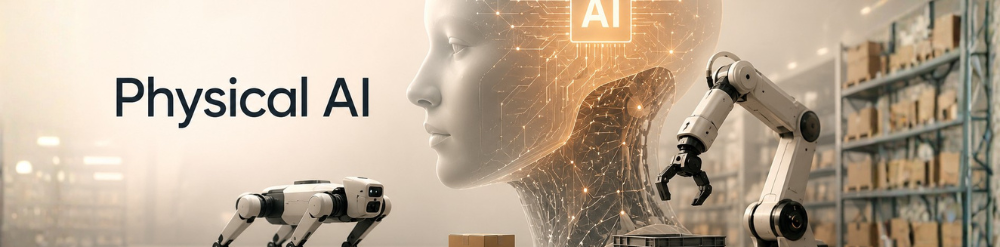
Technologies evolve continuously with major and minor advancements. In the field of artificial intelligence, we are seeing a significant shift from digital to physical intelligence. AI is no longer limited to chatbots, screens, and software; it is entering the physical world through machines such as drones, robots, and smart equipment.
A new era of intelligent systems is emerging. It is making machines smarter, faster, and significantly more autonomous than before. This evolution is known as physical artificial intelligence (AI). A unique technology that combines AI models with sensors, controllers, and other operational systems that can observe their surroundings, actively respond to moving objects, and interact with humans in real-world environments.
Let's delve into the entire blog and understand how physical artificial intelligence is powering drones, robots, and high-tech equipment.
Understand Physical AI Beyond Traditional AI
Many traditional AI models are typically trained to operate on large datasets, recognize patterns, or generate responses within digital environments. At the same time, physical AI takes this intelligence a step further by making machines interact directly with the actual world. It allows devices to understand their surroundings and act promptly.
Traditional AI systems mainly follow fixed instructions, whereas physical models adapt to a dynamic environment. Physical artificial intelligence integrates AI with sensors, robotics, and cameras.
In robotics, real-world machines help find difficulties and continue operating with minimal or no human interference. Similarly, autonomous drones can scrutinize weather conditions and avoid collisions.
AI-powered robotics is transforming machines from passive tools that wait for instructions into intelligent systems capable of following independent actions. After reviewing market data, it is evident that physical artificial intelligence demand in the market is expected to reach USD 87.43 billion by 2035.
These systems collect information from the environment via sensors, microphones, and user input to analyze, make decisions, and take immediate action without requiring constant human guidance.
Why is Physical AI Emerging Now?
Several supporting technologies have become more advanced. Faster AI models, more advanced sensors, and powerful processing chips are all making machines smarter and more responsive. They can react almost instantly to changing environments.
As a result, robots, drones, and smart equipment are becoming more autonomous and capable of operating without human guidance. Speed and accuracy are very important for real-world performance.
One of the major factors propelling the growth of physical artificial intelligence is the demand for automation across all industries. Businesses are prioritizing devices capable of implementing recurring tasks, reducing commercial risk, and handling difficult or dangerous tasks that humans cannot. It can process multiple types of data in real time, including text, speech, images, videos, and sensor input from the physical environment, thereby reducing delays and generating faster responses.
New Era of Self-Adapting Robotics
Physical AI is making robots more intelligent and useful across industries. Robotics has undergone a complete evolution from rigid automation to intelligent collaboration. The vast majority of modern robotics relies on AI-based components to adapt to changing environments dynamically in real time.
-
- sensors
- cameras
- machine learning models
If you have ever spent time in a storage facility, you will find robots working with humans to move things, avoid collisions, and reroute themselves within seconds when obstacles appear. Additionally, advanced robotic systems can even recognize human movement patterns and adjust their behavior accordingly.
In healthcare, intelligent robotic and monitoring systems track vital signs such as oxygen saturation level, pulse rate, respiratory rate, and blood pressure, providing the same high-quality medical care that patients receive in a hospital. In warehouses, these AI-driven robots speed up logistics while reducing manual labor.
The Advancement of Drones into Autonomous Systems
With the integration of physical AI, drones are transforming into more intelligent aerial systems. One of the finest advancements in AI-driven drones is their potential to collect and process information from above in real time. These drones are capable of examining environments, monitoring large areas, and adapting to changing conditions while in flight.
Traditional drones capture footage, whereas AI-powered drones can identify patterns, detect abnormalities, and make instant decisions.
With the help of physical artificial intelligence drones, it becomes very easy to quickly find locations that are challenging, dangerous, or impossible for humans to reach, making them highly valuable in industries such as disaster response, surveillance, agriculture, and infrastructure inspection.
How Smart Industrial Machines are Reducing Human Interference
Industrial machines require manual monitoring. But with the help of physical AI, this equipment is now becoming more intelligent. They can now track their performance, identify failures, and detect irregular behavior without disrupting the entire operation.
Physical artificial intelligence assists industrial machines in reducing financial damage and safety risks associated with prolonged downtime.
Instead of waiting for machine failure, smart equipment can detect overheating, unusual vibrations, pressure changes, or even performance drops. It continuously analyzes machine activity using embedded sensors. This automation helps businesses manage operations and maintain efficiency during high-demand periods.
Core Technologies Fueling Physical AI
Physical artificial intelligence does not work on a single layer of technology. It operates through multiple layers of intelligence that help it to observe, process, and respond to the physical world with speed and accuracy. The following are the core technologies powering physical artificial intelligence:
-
- Computer vision
- Sensors and IoT devices
- Edge computing
- Machine learning models
- Robotics and autonomous control systems
- real-time data processing
Together, these technologies form the foundation of physical artificial intelligence, enabling machines to complete operations in real-world environments successfully.
Final Thoughts:
Physical AI is completely changing the way machines interact with the real world. Instead of simply processing predefined instructions, these intelligent systems are learning and performing physical tasks. The most important factor is its combination of intelligence and physical capability. Physical artificial intelligence is playing a key role as industries invest heavily in smarter, more advanced technologies.
Excited to read some technical blogs, news, and some interviews. Check it out on our official website now.
FAQs
Q: Is physical AI the future?
Ans: Yes, physical artificial intelligence is already shaping the future, as businesses use it to make their workloads simpler and easier through advanced robotics, drones, and smart equipment.
Q: What are the key benefits of physical AI?
Ans: The following are some of the key benefits of physical artificial intelligence:
-
- It can operate even in difficult, dangerous environments where humans cannot work safely.
- Systems can analyze data and generate a real-time response, helping businesses make faster decisions.
- It can reduce errors and generate accurate results for any operations.
Q: What is the difference between physical AI and generative AI?
Ans: Generative AI can generate content on its own, whether it is audio, video, text, or even images, through data from voluminous datasets to learn the patterns. On the other hand, physical artificial intelligence performs tasks in the real world through machines and smart systems.
Q: List some applications of physical AI.
Ans: Physical artificial intelligence is already deployed in many sectors. Some applications are listed below:
-
- Warehouses
- Healthcare robots and robotic surgery systems
- Military and defense systems
- Disaster response and rescue robots
Recommended For You:
SLMs to Takeover LLMs? The Biggest Shift in AI Models
Role of IA (Information Architecture) in AI (Artificial Intelligence)