

Do you often feel unsure whether the AI's outputs are correct? As there is an extreme surge in generative AI content, other questions are emerging as well. Can you prove where the piece of content came from, who created it, whether it was modified, and so on?
This is where Digital provenance comes into the picture. It ranks among the top trending technologies today. The concept allows organizations to track the origin, authenticity, and history of digital content. It’s one of the most powerful governance frameworks for all senior leaders, individuals, and marketers. To help you get a clear idea of this technology, we’ll break everything down in this blog. So, let’s get started.
Understanding Digital Provenance
Digital provenance is an approach that keeps a record of the authorship, creation, and modification of digital content. In simple words, it gives answers to the questions below-
- Who created it and with which tool?
- When was it drafted?
- Whether it was generated by AI or modified?
It is essential for trust and compliance, as provenance identifies the primary source of AI-generated content, whether data, images, documents, or other sources. Simply put, it describes the original source of digital content. Let’s think of tracking the source of an online product you ordered. It gives all the details, including where it was shipped, who handled it, and when it reached the destination.
Digital provenance or content traceability works exactly in the same way. It keeps a record of digital content. This helps organizations ensure the content is reliable, verify its authenticity, and build trust among the audience that the content they produce and share is authentic.
Why is Digital Provenance Critical for Trust in AI-Generated Content?
There is a surge in deepfakes, AI-generated content, code, and more. It’s becoming a challenge to differentiate authentic content from synthetic media. This is where digital provenance helps. It gives the complete record of how the content was created, modified, and shared, allowing users to verify its authenticity and origin.
Government sectors are introducing strict rules concerning ethical AI usage and transparency. Neglecting this technology can lead to brand risk, causing reputational damage. Thus, organizations should adopt content traceability practices to establish where their content comes from and verify its authenticity.
Key Industry Initiatives Advancing Digital Provenance
There are some key efforts organizations are putting in to improve digital provenance. Here they are:
- Content Authenticity Initiative
- BBC's Project Origin
Both played a founding role in establishing the Coalition for Content Provenance and Authenticity (C2PA). It is one of the important open and technical standards that is created to verify the origin, history, and edits of digital content.
Technologies Supporting Digital Content Traceability
The following are some of the key technologies behind provenance that make it worth using.
Content Credentials: There are open standards, such as the Content Credentials launched by the Coalition for Content Provenance and Authenticity (C2PA). These credentials are used to initiate origin details, track tool usage, and they are restricted to the asset for independent verification.
Blockchain’s decentralized model: Blockchain’s decentralized model creates permanent, tamper-resistant records of ownership and transactions. In areas such as art and supply chains, it ensures transparent provenance, building trust in authenticity, and history.
Benefits of Content Traceability
Digital provenance or content traceability comes with several advantages. Below, we have mentioned them.
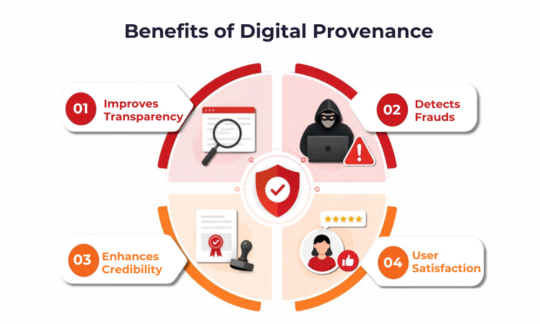
- Improves Transparency: As digital content is tracked through its history, ownership, and creation, it creates digital transparency. As users have a clear idea of the content, it is less likely to be unreliable or false.
- Detects Frauds: Digital provenance records change to content or data, making it easy to identify unauthorized modifications, fake information, and more.
- Enhances Credibility: When organizations publish relevant and credible content, it builds trust among the audience and makes them more responsive to the content.
- User Satisfaction: This approach ensures that users feel confident that the content they are browsing is authentic, thereby improving satisfaction.
How Can Organizations Implement Digital Provenance?
Utilizing Tools and Frameworks: Organizations can start using the existing tools and frameworks. Google has a SynthID watermark that detects AI-generated content. Alongside, organizations can use digital provenance tools such as Kepler and Linux Provenance Modules.
- Automated Tracking: Organizations can track content created, modified, and approved across the entire system.
- Develop Custom Algorithms: Developing algorithms that detect unusual behavior or false content will help in avoiding potential security issues.
The Need for Verifying Synthetic Content!
According to industry reports, around 90% of online content is synthetic. It is growing immensely and is becoming a common part of the digital ecosystem. This AI-generated content includes synthetic audio, images, and video. It comes with challenges regarding content verification and digital trust.
Attackers now use AI to create phishing attacks. Alongside, AI helps craft fake emails, voice clones, deepfake videos, and more. Thus, all this content needs to be verified in the first place to avoid further consequences.
Wrapping it Up!
Digital provenance is here to create a broader impact on the digital ecosystem, where AI is at the center stage. The future seems to promise a wider adoption of Content Credentials, which embed verifiable metadata into media content to provide authenticity and prevent misinformation. By keeping track of how digital content is generated, updated, and shared, digital provenance supports AI adoption and builds trust in the AI-first world. So, in short, it ensures the digital content remains trusted and authentic for the audience.
To stay updated with more such blog posts, head over to our website now.
FAQs
Q: What are the standards for digital provenance?
Answer: Some of the top standards include: C2PA, ISO/IEC 27037, and the Budapest Convention on Cybercrime.
Q: How does digital provenance prevent deepfakes?
Answer: Digital provenance does not prevent the creation of deepfakes. The strategy rather uses content signing through with the authenticity of an image or video can be proved.
Read More:
Is Multi-Factor Authentication a Scam?