
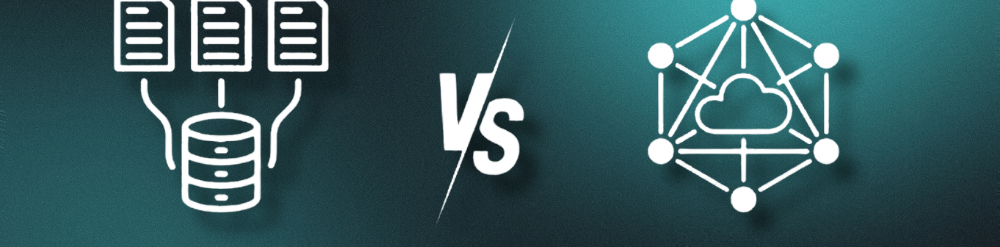
With the vast amounts of data generated by organizations, managing it effectively has become a challenge. By 2026, global data consumption is expected to grow to 221 zettabytes, making data management a key factor to consider. Data fabric and data mesh are the two modern approaches to managing data complexity. A data mesh architecture focuses on team ownership and treating data as a product. In contrast, a data fabric architecture uses technology, governance, and automation to connect data across multiple systems and make it usable.
Even though both approaches aim to address the challenge of data management, data fabric vs data mesh differ in certain aspects of data integration, ownership, governance, and accessibility. In this blog post, we will dive deep into data fabric and data mesh, covering their benefits, use cases, and when to use which approach.
Data Fabric Explained
Data fabric is a data architecture approach that enables the connection of multiple data sources and systems across on-premises, public, and private cloud environments. It integrates technologies such as automation, advanced APIs, metadata management, and services to provide unified, automated access to distributed data, no matter where it resides. The main aim of data fabric architecture is to reduce data silos, enhance governance, and provide a secure place for accessing data.
Key Benefits of Data Fabric Architecture:
- Unified data access: Provides a unified management layer over distributed data sources.
- Improved data governance: Helps organizations maintain data quality, security, and compliance.
- Scalability: Data fabric grows as the volume of data increases and the organization's needs change.
- Faster Insights: By integrating data in real-time, data fabric allows organizations to deliver actionable insights more quickly.
Data Mesh Explained
Data Mesh is a decentralized approach to data architecture that emphasizes domain-specific ownership and self-serve data infrastructure. Instead of moving data to a warehouse or central repository, Data Mesh allows end users to query data where it lives. It was first introduced by Zhamak Dehghani in 2019.
The architecture is here to manage the vast amount of data created by businesses by enhancing cross-functional collaboration and decentralization, rather than relying on traditional centralized architecture. Data Mesh distributes data ownership across different business domains and treats domains as a product.
Key Benefits of Data Mesh Architecture:
- Scalable architecture: Data mesh features a distributed design that enables flexible scaling to meet growing business demands.
- Improved data accessibility: A data mesh transfers the entire data control to domain experts who create meaningful data products within a decentralized governance framework.
- Reduced data silos and improved collaboration: Data mesh allows domain experts to take ownership of their datasets, reduce data silos, and improve collaboration.
Data Fabric vs Data Mesh Differences
Data fabric and data mesh both approaches aim to address the challenges in data architecture and management. Both of them differ in certain aspects that you should know. Take a look at the comparison below.
| Parameter | Data Fabric | Data Mesh |
| Type of architecture | Centralized access layer | Decentralized domain ownership |
| Capabilities | It delivers capabilities such as data access, transformation, integration, governance, and more. | It follows a domain-oriented architecture with capabilities such as self-service infrastructure, data as a product, and federated governance. |
| Tools and vendors | Talend, Ataccama, and Google Cloud. | Starburst, Denodo, and cloud platforms like Snowflake. |
| Orientation | Technology and automation centric | Organizational and process centric |
| Data ownership | Mainly centralized or shared central services. | Domain-owned along with federated governance. |
| Scalability | Scales by integrating and managing huge volumes of data | Scales by distributing data ownership across domains. |
| Focus | Data integration | Data as a product. |
| Integration method | AI-driven and automated | Human domain expertise |
Data Fabric vs Data Mesh: Most Popular Use Cases
Data Fabric Use Cases:
- Real-time fraud detection: A bank can detect fraudulent activity in real time, reducing financial losses caused by siloed transactional data.
- Sales forecasting: By integrating real-time data, a data fabric helps to improve forecast accuracy and move towards more proactive planning.
- Retail and eCommerce: It combines online and offline POS data and inventory levels to deliver customer 360 views and real-time recommendations.
Data Mesh Use Cases:
- Customer support: Data mesh architecture provides virtual assistants and chatbots with quick access to high-quality data across multiple domains.
- Manufacturing and supply chain: Provides end-to-end visibility across your value chain without centralizing expertise and reduces downtime.
- Financial planning: Empowers finance teams to manage financial data domains for accurate forecasting, budgeting, and scenario planning.
Making the Decision: Choosing Between Data Fabric and Data Mesh
Below are some key points to consider before choosing the architecture for your organization’s needs.
When Should You Choose Data Fabric?
This architecture works well for organizations that generate vast amounts of distributed data across multiple systems, cloud, and premises. For organizations looking to democratize access to data and unlock real-time insights, data fabric architecture is the go-to option. Data fabrics create a unified layer where teams can search, query, and use information without navigating through separate systems.
When Should You Choose Data Mesh?
Data mesh is ideal for organizations that operate with slow processes and centralized data ownership; that creates barriers. It gives domain teams the required control over data quality, definitions, and delivery for faster results. Data mesh can be used by organizations looking for reliable data architecture, integration, and governance capabilities.
Data Fabric vs Data Mesh: Factors to Consider Before Choosing the Right Architecture
The choice between data fabric and data mesh totally depends on your organization’s priorities and requirements. Below are some of the considerations that help you choose the right approach:
- Data quality and consistency
- Scalability and flexibility
- Accessibility and data integration
- Regulatory requirements
Final Words!
Data fabric and data mesh architectures offer distinctive approaches to data management, each with its own benefits. Data fabric focuses on a centralized framework for integrating and managing data. On the other side, data mesh focuses on decentralized ownership and autonomy.
Choosing the right data architecture is essential for organizations looking to unleash the full potential of their data assets. However, the choice depends entirely on which approach best aligns with your needs and objectives. Hope this blog has given a clear overview of the differences to help you make a well-informed decision.
To stay aligned with more such technology-related topics, head over to our website now.
FAQs about data fabric vs data mesh
1] What are the four pillars of data mesh?
Answer: The key pillars of data mesh are data as a product, domain-oriented decentralized ownership, federated computational governance, and a self-service data infrastructure platform.
2] Can data fabric and data mesh work together?
Answer: Yes. Organizations can use both data fabrics for integration and accessibility, with data mesh for domain ownership and product management.
Recommend Reads:
10 Best Practices for Master Data Management to Consider
Data Monetization – How to Gain Profits from Your Business Data!