
In today's modern B2B buyer landscape, choosing the right go-to-market strategy is one of the most important decisions a SaaS company can make. Your GTM motion determines your product positioning, organizational architecture, marketing stack, and revenue potential from day one. The two most popular options are Product-Led Growth and Sales-Led Growth. The key difference is that in PLG, the product does the selling, and in SLG, the sales team does.
Product-led growth vs. sales-led growth is a big debate in SaaS. The right choice can accelerate your business growth, while the wrong choice can stall it for years. Not sure where to start? You've come to the right place. In this blog, we'll break down product-led growth vs. sales-led growth to help you build strong growth engines.
What Is Product-Led Growth (PLG)?
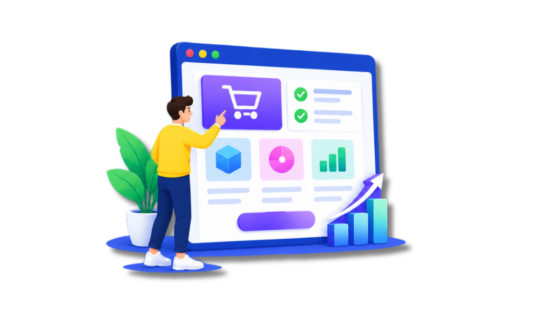
Product-led growth is a go-to-market strategy in which the product drives customer acquisition, activation, and expansion. In this model, users can discover, try, and unlock the product's real value before a sales conversation, mainly through freemium, free trials, or self-service onboarding.
However, the product has to take the user from sign-up to a valuable outcome, whereas onboarding, support, packaging, and billing make that path work. Simply put, the product is the company's core growth engine. Slack, Zoom, Dropbox, and Figma built massive user bases by allowing the product to speak for itself. Also reports say, 58% of B2B SaaS companies have a product-led growth (PLG) motion strategy and nearly all with PLG plans to increase investment.
Key Advantages of Product-Led Growth Motion:
- User-centric: The PLG motion is built around customer experiences and feedback, leading to higher customer satisfaction, better market fit, and increased revenue.
- Better team alignment: With product at the center, it's easier for companies to coordinate. They carry different responsibilities, but they work together towards a goal.
- In-product onboarding: It guides users to the real value without needing a human to walk through the complete process.
- Faster time to value: Product-led growth delivers value quickly and scales naturally as more users discover and use it.
What is Sales-Led Growth (SLG)?

Sales-led growth, as the name suggests, is a go-to-market model in which a dedicated sales team and human interactions drive maximum revenue through relationship-building, outbound prospecting, and more. In the sales-led-growth model, the sales team owns the entire buyer journey, from initial outreach through demos, negotiation, and closing the deal.
Companies like Salesforce, Oracle, and others have scaled their business using the sales-led go-to-market models. Sales-led growth works better in environments where customer acquisition cycles are longer, and onboarding requires more coordination.
Key Advantages of Sales-Led Growth Motion:
- High Average Contract Value (ACV): Sales representatives are highly effective at negotiating customized, multi-year enterprise deals.
- Deeper relationships: Frequent contact with the sales team builds trust. Buyers feel supported, which builds stronger partnerships and expansion opportunities.
- Targeted buy-in: SLG focuses on decision makers with potential purchasing power.
What Does Today's Modern B2B Buyer Landscape Look Like?
Buyers have become more skeptical today. They prefer to do their own research before making a purchase. In short, rep-free experiences are rising. They don't want to engage directly with a sales representative. Gartner reports reveal that 67% of B2B buyers prefer a rep-free experience. Buyers need to review pricing, test features, and more.
Product-Led Growth vs Sales-Led Growth: What Are the Actual Differences?
Below are the head-to-head differences between PLG and SLG. Understanding these key differences gives a clear idea of which motion fits your business and where the hybrid approach works well.
| Factor | Product-Led Growth | Sales-Led Growth |
| Primary growth engine | The product | Sales team |
| Sales cycle length | Days to weeks | Weeks to months |
| Purchase coordination | Follows a direct purchase path | Needs coordination between multiple stakeholders |
| Buyer | Individual buyers or small startups | Procurement |
| Typical ACV range | Low (hundreds to low thousands) | High (tens of thousands +) |
| Key metrics | Meaningful usage, expansion behavior, and adoption breadth | Stakeholder progress, qualified opportunity, and evaluation milestones |
| Onboarding | Automated and self-guided | Sales-assisted and personalized |
| Pricing | Free trial, usage based, freemium | Negotiated contracts |
| Marketing goal | Engagement and user growth | Lead generation, pipeline generation |
Choosing the Right GTM Motion for Ultimate Business Growth
There is no perfect answer to the PLG vs SLG question. However, below are some of the important factors wherein the two growth engines stand apart:
When to Consider PLG?
A small startup with a self-service product and a broad market of individual adoption potential. PLG works best when product usage creates buying momentum, without needing a sales team.
- Users can start without going through procurement.
- Where purchasing decisions need fewer stakeholders and less negotiation.
- Customers can try, adopt, and use the product independently.
When to Consider SLG?
SLG is ideal for companies focused on selling complex software to large-scale organizations. It wins when the decisions are multi-stakeholder or economically impactful. In this approach, buying confidence matters as much as product capability.
- Involves Complex security or legal workflows.
- Customers are large-scale organizations with structured buying processes.
Questions to Ask Before Choosing Your GTM
1] How fast can a new user reach meaningful value?
2] What is your average contract value (ACV)?
3] Who is the key economic buyer? Can they buy the product without procurement involvement?
Product-Led Growth vs Sales-Led Growth: The Final Win
So, ultimately, your GTM motion strategy clearly determines your organizational structure, hiring aspects, asset distribution, and operations for years to come. The debate is often called product-led vs. sales-led. PLG companies invest unequally in product and engineering, as the product here is the main growth engine.
On the other side, SLG companies invest unequally in sales and marketing aspects. Yes, the ideal choice depends on your buyer profile, deal complexity, product characteristics, and more. Choose the right GTM motion and align your teams, resources, and investment around the approach that takes your business to the next level.
To read more top-trending blog topics, visit our website now.
FAQs
1] Can you use both product-led growth and sales-led growth models?
Answer: Yes, most B2B SaaS companies adopt the hybrid approach. It uses PLG for acquisition and retention, and then sales-led for expansion and complex deals. The key is outlining a clear handoff, mainly a product-qualified lead threshold, so the sales team engages at the right moment rather than too late or too early.
2] What are the 4 types of growth strategies?
Answer: The four types of GTM strategies are product-led growth, sales-led growth, marketing-led growth, and community-led growth.
You May Also Like:
Customer Centric Marketing Strategies
Lead Scoring: The Ultimate Strategy to Skyrocket Your Lead Generation Initiatives