

AI is more than just a buzzword today. From writing your work email replies to creating a birthday invitation card, AI automates complex manufacturing processes. On the other side of the coin, are you even scared of AI taking up half the jobs around?? According to research, around 77% of businesses use AI, 44% explore it for their work, and 33% have implemented it entirely.
But the scenario is different. AI is here to stay and help, not to replace humans. Here comes the 30% rule in AI: a simple guideline for finding the perfect balance between automation and human insight. According to the rule, AI should handle a certain portion of your task so that you can focus on the rest of the important tasks.
Curious to dive deep into the 30% AI rule? This blog clarifies the same for you. So, with no further ado, let’s begin.
So, What is the 30% Rule in AI?
The 30% rule in AI, put simply, is a framework in which AI should automate 30% of the repetitive, rule-based, and operational work, and the remaining 70% is taken over by humans, who require creativity, strategy, empathy, and decision-making.
The main aim of this rule is to strike a perfect balance between AI and human collaboration.
This approach stands out for helping reduce the fear of losing jobs and involving humans in critical, value-driven work. The 30% approach is not limited to a single job; it can be implemented in many ways, as appropriate. Alongside, it helps build customer loyalty, ensuring that when human touch is not just important, it is extraordinary when available.
Where AI Outperforms (The 30%)
AI is beneficial in different scenarios, such as automating repetitive tasks, solving common customer queries, and more. Look at the most important ones below:
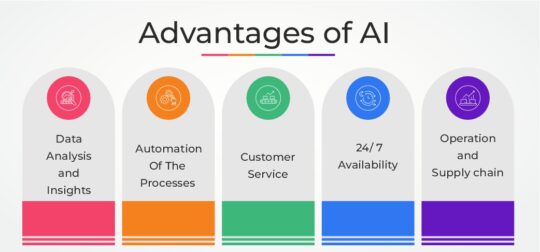
1] Data analysis and insights: AI can analyze and process large amounts of data. This can help to figure out trends, anomalies, and correlations in data.
2] Automation of the processes: This involves automating all the standard processes, such as processing invoices, classification of documents, sending reminders, and more.
3] Customer service: AI chatbots can respond to the commonly asked questions, and provide, first-level customer support.
4] 24/7 Availability: AI-powered algorithms can work round the clock, mainly in the financial industry. These systems work constantly with no interruptions.
5] Operation and supply chain: Helps predictive maintenance, inventory optimization, and demand forecasting.
Manual work might be decreased by AI significantly, errors might be minimized, and teams will be able to dedicate their time to more productive activities in these regions.
Where Humans Make an Impact (The 70%)
AI alone is not enough. Humans remain the first and foremost contributors in improving business efficiency in all aspects.
Complex Problem Solving: Where AI can process and analyze large volumes of data, humans excel at creative problem solving, which is beyond complex algorithms.
Strategic Decision-Making: Humans are capable of defining goals, setting priorities that AI cannot do.
Ethical judgment: Here, the best example is legal, where judges and lawyers are responsible for taking the right ethical decisions, ensuring justice.
Relationship management: Real voices always make an impact on customers, and a personalized experience is way better than an AI chatbot. It also helps to build trust among customers.
Accountability: Matter of responsibility in results and actions.
How to Maintain the Right Balance? AI and Human Touch – 30%
Considering the above strengths of AI and humans, it’s clear that when they collaborate effectively, they can deliver the best results.
What humans do, AI cannot. AI is a powerhouse, and humans are drivers. AI cannot think beyond the context, lacks emotional connection, and empathy. The ratios together can create:
-
- Maximum productivity
- Improved decision-making
- Unlock success while keeping humans
The main goal is building a tech-first world while nurturing people’s strengths and ideas.
The Key Benefits of 30% AI Rule
Here are a few benefits of 30% rule you should know:
-
- Brings strategic changes in the workforce and productivity.
- Reduces job displacement anxiety among employees.
- Human skills and intelligence are irreplaceable.
- Employees can switch to roles that align with AI and focus on tasks that require. empathy, decision-making, and more.
Real-World Examples of the 30 Percent Rule in AI
The 30 percent rule in AI applies across a range of industries, including marketing, finance, support, manufacturing, and others.
Healthcare: AI can analyze medical images to identify potential anomalies, but doctors make the final diagnosis and treatment decisions.
Customer Support: AI can resolve repetitive customer queries, but complex or sensitive issues are addressed by human agents only.
The Takeaway: Your Progress through Balanced Automation with the 30% AI Rule
The 30% rule in AI aims to strike the right balance between AI automation and human involvement. When synced well, it’s here to drive maximum productivity to several mundane tasks, rather than replacing humans.
Thus, organizations should start adopting the 30 percent rule in AI and experience results like never before. AI is here to stay and make an impact, so it's essential to adapt with the flow wisely and work towards the AI-driven future without neglecting human involvement.
For more insightful and top-trending blogs around the tech landscape, visit our website now.
FAQs
Q: What is the 70 30 rule in AI?
Ans: The logic is simple. It doesn’t matter if you are working on a project, content, or code; no more than 30% of your work should be done with AI tools. The rest 70% should come from the learners' ideas, research, and more.
Q: What are the 7Cs of AI?
Ans: 7 important factors are essential in the practical understanding and implementation of AI. They are as follows:
-
- Capability
- Capacity
- Collaboration
- Creativity
- Cognition
- Continuity
- Control
Recommended For You: